

Learn how to investigate the climate crisis, no matter your beat or experience level
Build practical investigative skills in the online course Climate journalism: investigative reporting for every beat, organized by the Knight Center for Journalism in the Americas in partnership with the Global Investigative Journalism Network, running from June 1 to June 28, 2026.
In this four-week course, instructors Diego Arguedas Ortiz and Toby McIntosh guide journalists and editors through how to approach climate reporting with an investigative lens, from understanding key concepts to developing impactful stories. The course focuses on helping participants cover climate change across beats, regardless of prior experience.
By the end of the course, participants will be able to:
Each module introduces essential concepts, investigative techniques, and practical tools to strengthen reporting. The course also features insights from experienced journalists who share how they uncovered major climate stories.
Join this FREE online course to strengthen your investigative skills and report on the climate crisis with greater impact.
The course is organized into five weekly modules, combining videos, readings, and discussion forums:
Introduction Module: Start by exploring why climate change is fundamentally an investigative story. Learn how power, accountability, and inequality shape climate coverage, and how to identify climate angles across any beat.
Module 1. Fossil fuels and clean energy: Understand the central role of energy in the climate crisis. Learn how to investigate fossil fuel companies, government support, and the broader network of actors influencing the energy transition.
Module 2. Nature and food: Examine how food systems, deforestation, and nature loss contribute to climate change. Learn how to report on agriculture, supply chains, and environmental impacts using data and other sources.
Module 3. Heat and health: Explore how climate change affects human health, especially through rising temperatures and extreme weather. Learn how to report on impacts affecting workers, vulnerable communities, and public systems.
Module 4. Holding companies and governments accountable: Focus on tracking climate commitments and investigating whether they are fulfilled. Learn how to analyze promises, policies, and climate solutions across sectors.
Register now for free and get started.
Questions? Contact us at journalismcourses@austin.utexas.edu.
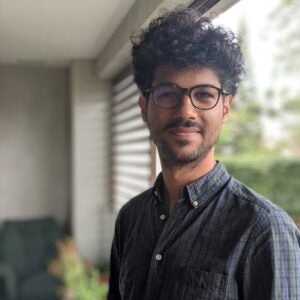
Diego Arguedas Ortiz is a climate journalist and trainer.
From 2022 to 2025, he served as the Associate Director at the Oxford Climate Journalism Network at the Reuters Institute for the Study of Journalism, Oxford University. He supported over 800 editors and journalists from over 120 countries to improve the quality and impact of their climate journalism.
He has worked extensively training journalists globally and with a focus on Latin America, including work with the Central American Journalists Network, the Festival GABO and the Inter American Development Bank.
He led the University of Costa Rica’s Communication School’s journalism bachelor’s degree from 2018 to 2019, and taught there from 2016 until 2021.
As a reporter, he has covered climate change since 2013 and his work has appeared in BBC Future, MIT Technology Review and The Observer, among other outlets. His work includes six UN Climate Conferences, the Panama Papers international collaboration in 2016 and on-the-ground reporting from a dozen countries. In 2015, he was the founder of Ojo al Clima, Central America’s first climate outlet.
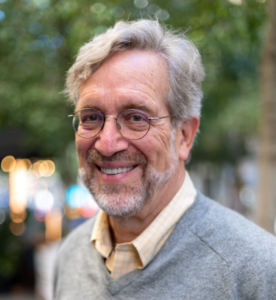
Toby McIntosh is a senior advisor for the Global Investigative Journalism Network’s Resource Center.
He has written guides for reporters about climate change, including on carbon credits, methane, heat, sea level rise and government accountability.
From 1975 to 2014, he was a reporter and editor in Washington with BNA (later bought by Bloomberg), covering Congress, regulatory agencies and the White House.
He was the editor of Freedominfo.org (2010-2017), a nonprofit website on international transparency laws. His own blog, Eye on Global Transparency, focuses on transparency at international organizations.

Knight Center for Journalism in the Americas
300 West Dean Keeton
Room 3.212
Austin, TX, 78712
Phone: 512-471-1391
Email: journalismcourses@austin.utexas.edu