


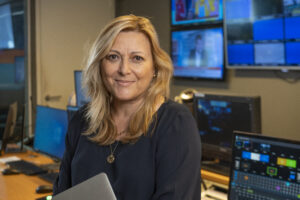
Sandra Crucianelli is a journalist specializing in data journalism and investigative reporting. Currently, she is the coordinator of the Data Intelligence Unit at www.infobae.comin Argentina. She is also a member of the International Consortium of Investigative Journalists (ICIJ) (https://www.icij.org/author/sandra-crucianelli/). She has been part of teams involved in projects such as Panama Papers, Paradise Papers, Implant Files, and FinCEN Files, among other transnational initiatives.
Since 2003, she has been conducting training courses in Mathematics for Journalists, Investigative Journalism, Electoral Coverage and analysis of electoral polls, Crisis Coverage, and data journalism.
She was a Knight International Journalism Fellow member at the International Center for Journalists from 2012 to 2013 (https://www.icfj.org/our-work/knight/profiles/sandra-crucianelli).
Additionally, she is a member of Connectas, a collaboration among journalists from Latin American countries, and was involved in the Panama Papers project (https://www.connectas.org/member/sandra-crucianelli/.)
She contributes to digital journalism education as an instructor at the Digital Training Center of the University of Guadalajara, Mexico (https://www.cfpdudgvirtual.org/personnel/sandra-crucianelli/).
She has conducted online courses for the Knight Center at the University of Texas since 2003 (https://www.journalismcourses.org/instructor/sandra-crucianelli/).
Sandra is also the author of the book «Herramientas Digitales para Periodistas» (Digital Tools for Journalists) (https://journalismcourses.org/es/ebook/herramientas-digitales-para-periodistas/.)
She resides in the city of Bahía Blanca, Argentina.
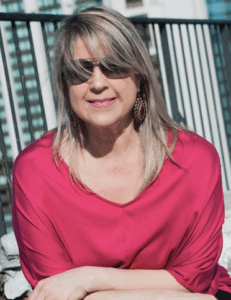 Alejandra Monteoliva: Graduated from the Faculty of Political Science and International Relations at the Universidad Católica de Córdoba, Argentina, and holds a Master’s in Planning and Management of Development from the Universidad de los Andes, Colombia.
With over 28 years of experience, she specializes in designing and implementing public policies and regional development processes in Latin America. She focuses on citizen security policies and programs, particularly in police operations, statistics, and crime analysis.
She has extensive experience coordinating efforts with various security forces across Latin America. In Colombia, she served as an advisor for academic and curricular management for the National Police of Colombia from 2003 to 2015.
As a public official in Argentina, she has held high-level positions in security, including Minister of Security in the Province of Córdoba, Director of Strategic Planning, and Coordinator of the first Crime Observatory in the province. On a national level, until December 2019, she served as the National Director of Operations for Federal Security Forces at the Ministry of Security of the Nation.
She is a teacher and researcher at various universities in Colombia and Argentina, with numerous publications. She is a member of international networks and associations and is the Director of the Observatorio de Seguridad Ciudadana.
Currently, she is part of the citizen security team at the Regional Office of the UNDP-Infosegura Project.
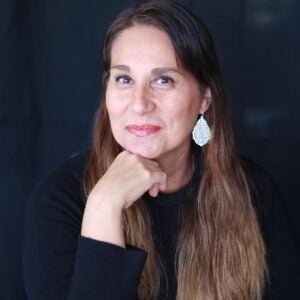 Mariana Alvarado is a bilingual journalist and editor based in Mexico City, with more than 27 years of experience in web and print. She is a professor at Florida International University (FIU) in the United States and at the University of Guadalajara and ITESO in Mexico. As a collaborator with the Knight Center for Journalism in the Americas, she was recently an assistant instructor for «How to use ‘ChatGPT and other generative AI tools in your newsrooms”, a free multilingual course in English, Spanish and Portuguese that attracted more than 10,000 students from 150 plus countries.
As a Google teaching fellow, she trained more than 18,000 journalists in Mexico, Colombia, Central America and the Caribbean in digital tools for investigative journalism and to combat disinformation and promote innovation. She’s the founder and coordinator for the Network of Diversity in Latin American Journalism and a Media Viability Ambassador with the Deutsche Welle Akademie.
Pioneer of digital newsrooms in Mexico, founded mural.com and negocios.com for Grupo Reforma. In 2019 she was inducted into the FIU Hall of Fame for his contributions to journalism in the United States and Latin America. She has collaborated with Grupo Reforma and Grupo Expansión in Mexico, and with media such as the Arizona Daily Star in the United States. For her research on border issues, migration, and health, she received the AP International Perspective Award among other honors from the Arizona Press Managing Editors, Investigative Reporters and Editors (IRE), Felix Varela Award, and Best of the West.
Twitter: @alvaradomariana