Start learning today!
Get early access to learning opportunities from Journalism Courses by the Knight Center.
Great editing is about more than fixing typos, it’s about making the decisions that shape how news gets reported, produced, and understood.
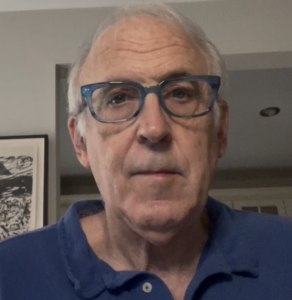
Join How Editors Make the News Happen: A Practical Guide to Newsroom Editing Beyond Copy Editing, a four-week online course organized by the Knight Center for Journalism in the Americas. Instructor John O’Neil, a former editor at The New York Times and Bloomberg News, will guide journalists through the many roles editors play in a newsroom, from evaluating story ideas and making assignments to coordinating reporting, visuals, deadlines, and publication.
By the end of the course, you will be able to:
The course combines practical guidance with real-world newsroom examples to give you an inside look at the conversations and decisions that shape how news gets made. No previous editing experience is required.
This course is designed for early-career editors, reporters considering a transition into editing, journalism students, established journalists, and communications professionals interested in understanding how newsrooms work.
Enroll now to build the skills you need to turn reporting into strong, accurate, and meaningful coverage.
The course is divided into five modules, combining practical strategies, newsroom examples, and activities:
Introduction Module: An Overview of Roles and Rhythms
Newsrooms rely on structures, roles, and routines to make decisions under pressure. This module introduces common editorial roles, their responsibilities, and how they fit into the larger flow of the newsroom.
Learning Outcomes:
Guest speakers: Mitchell Stephens, professor of history at New York University, and Andrew Pettegree, professor of history at the University of St. Andrews.
Module 1: How the News Gets Going (Oct. 19–25)
Editors begin each news cycle by deciding what to cover, who should cover it, and how to make the plan work when news changes. This module explores assignments, deadlines, story development, and coverage planning.
Learning Outcomes:
Module 2: Taking Stock (Oct. 26–Nov. 1)
Once reporting begins, editors assess what reporters have found, identify the strongest stories, and determine what guidance is needed. This module focuses on debriefing, developing story plans, identifying gaps, and coordinating coverage.
Learning Outcomes:
Module 3: From Draft to Done (Nov. 2–8)
When stories are filed, editors shape them for publication while managing deadlines, priorities, visuals, and audience needs. This module covers substantive editing, story prioritization, publication decisions, and newsroom coordination.
Learning Outcomes:
Module 4: Getting It Right (Nov. 9–15)
Editors play a critical role in preventing errors, omissions, and ethical problems from reaching publication. This module examines how to identify and address standards issues while working constructively with reporters and newsroom leaders.
Learning Outcomes:
Enroll now to get immediate access to the Introduction Module.
Questions? Contact us at journalismcourses@austin.utexas.edu.
John O’Neil worked as an editor at The New York Times for 24 years and at Bloomberg News for 11 and wrote articles on science, education and other topics for both. He is currently doing freelance editing and writing, along with experimenting with AI tools for journalism education. He has previously taught courses for the Knight Center for Journalism in the Americas on explanatory journalism, news research and on “writing tight and editing tighter.” An essay by him was the capstone of a series on autism that was nominated by The Times for a Pulitzer Prize in Explanatory Reporting. O’Neil co-wrote an album of songs about autism that were recorded by Jackson Browne, Dar Williams and others. He lives in Brooklyn, NY.

Knight Center for Journalism in the Americas
300 West Dean Keeton
Room 3.212
Austin, TX, 78712
Phone: 512-471-1391
Email: journalismcourses@austin.utexas.edu
Get early access to learning opportunities from Journalism Courses by the Knight Center.